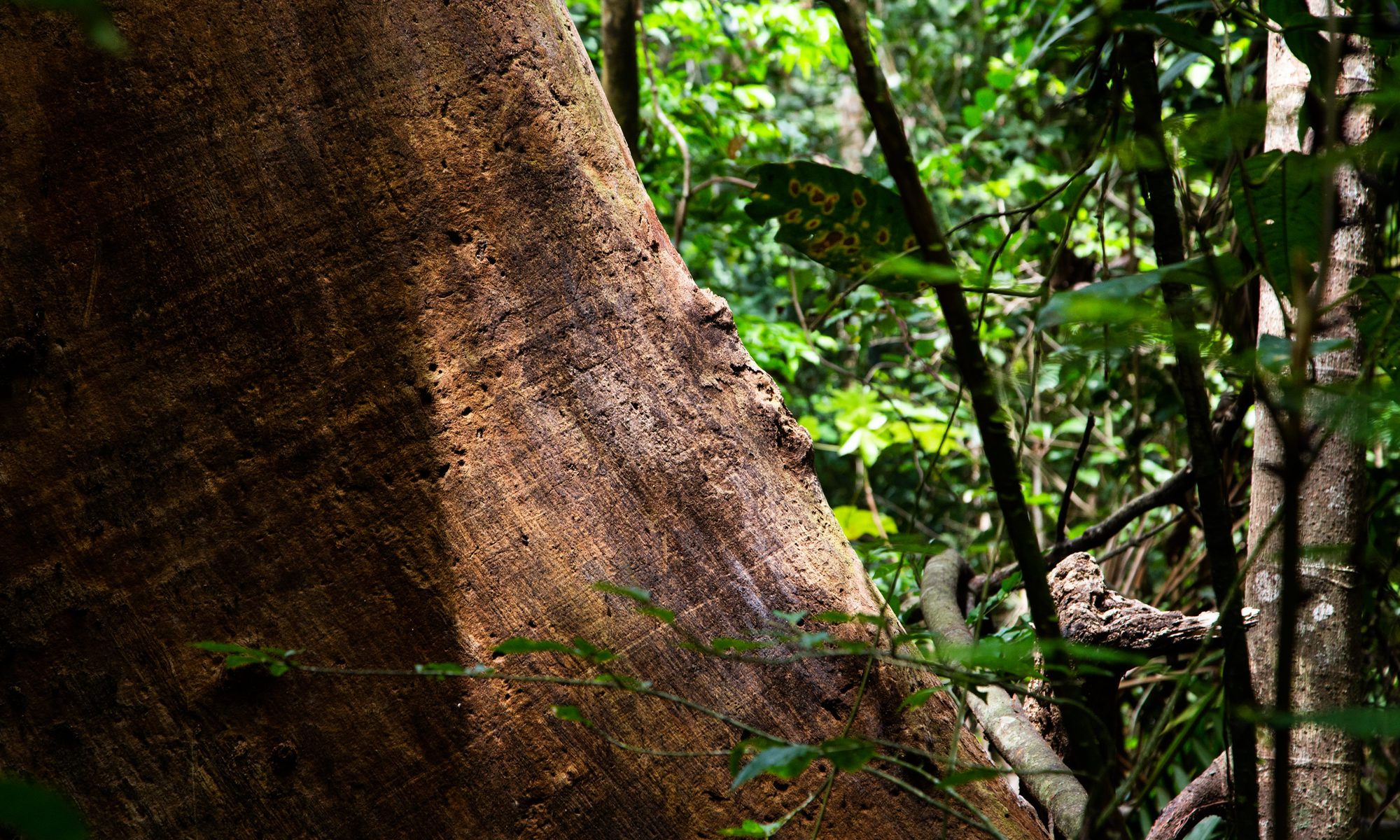
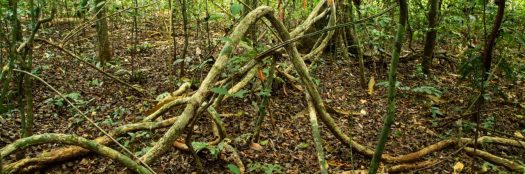
Fallen and standing woody debris constitute a large portion of total above-ground carbon in tropical and temperate forests (Keller et al. 2004; Rice et al. 2004). In addition to being an important carbon pool, aboveground necromass is important in nutrient cycling, water retention, fuel load, and as resources for many organisms. Despite its importance and possible sensitivity to global change, relatively few studies have evaluated stocks of woody debris or standing dead trees in tropical ecosystems and even fewer have quantified their fluxes (Figure 1). Inputs from branchfall and outputs due to fire are particularly poorly quantified. Data collection has been much more extensive in temperate ecosystems (Harmon et al. 1986).
We designed the ForestGEO / CTFS fprotocols for woody debris, and implement these on Barro Colorado Island.
 Quantitative Forest Ecology