
Tropical Plant Community Ecology
Individual tropical forests commonly contain >100 tree species and >50 liana (woody vine) species in an area the size of a football field, and can contain >1,000 woody plant species in a square kilometer. Ecologists have long sought to understand what mechanisms prevent one or a few species from outcompeting and excluding the others. Tradeoffs in performance among spatially varying habitats and temporally varying climate conditions clearly play a role, as do interactions with specialized natural enemies that tend to disproportionately plague and disadvantage any given species in areas where it is locally more common. How do tropical woody plant species differ in their functional traits, life history strategies, performance in different environmental conditions, and interactions with natural enemies? How do these differences affect species coexistence and contribute to whole-forest function? We conduct empirical and theoretical research to address these questions, with empirical research focused on central Panama and the ForestGEO network.
Selected References
Muller-Landau, H. C., and S. Joseph Wright. 2024. The Importance and Diversity of Dominant Plant Species of Barro Colorado Island, and the Value of Focal Species Accounts. The First 100 Years of Research on Barro Colorado: Plant and Ecosystem Science, ed. H. C. Muller-Landau and S. J. Wright, pp. 617-628. Washington, D.C.: Smithsonian Institution Scholarly Press. http://doi.org/10.5479/si.26880826
Wright, S. Joseph, Osvaldo Calderón, Andres Hernández, and H. C. Muller-Landau. 2024. Flower and Seed Production, Seedling Dynamics, and Tree Life Cycles. Chapter 10 in The First 100 Years of Research on Barro Colorado: Plant and Ecosystem Science, ed. H. C. Muller-Landau and S. J. Wright, pp. 91-101. Washington, D.C.: Smithsonian Institution Scholarly Press. https://doi.org/10.5479/si.26882626
Broekman, M. J. E., H. C. Muller-Landau, M. D. Visser, E. Jongejans, S. J. Wright, and H. de Kroon. 2019. Signs of stabilisation and stable coexistence. Ecology Letters 22:1957-1975. DOI: 10.1111/ele.13349
Detto, M., and H. C. Muller-Landau. 2016. Stabilization of species coexistence in spatial models through the aggregation-segregation effect generated by local dispersal and nonspecific local interactions. Theoretical Population Biology 112:97-108. DOI:10.1016/j.tpb.2016.08.008
Detto, M. and H. C. Muller-Landau. 2016. Rates of formation and dissipation of clumping reveal lagged responses in tropical tree populations. Ecology 97:1170-1181. DOI: 10.1890/15-1505.1
Marks, C. O., H. C. Muller-Landau, and D. Tilman. 2016. Tree diversity, tree height and environmental harshness in eastern and western North America. Ecology Letters 19:743-751. DOI: 10.1111/ele.12608
Muller-Landau, H. C. 2010. The tolerance-fecundity tradeoff and the maintenance of diversity in seed size. Proceedings of the National Academy of Sciences 107:4242-4247. DOI: 10.1073/pnas.0911637107
Larjavaara, M. and H. C. Muller-Landau. 2010. Rethinking the value of high wood density. Functional Ecology 24:701-705. DOI: 10.1111/j.1365-2435.2010.01698.x
Muller-Landau, Helene C. 2008. Colonization-related tradeoffs in tropical forests and their role in the maintenance of plant species diversity. Pages 182-195 in Tropical Forest Community Ecology. W. P. Carson and S. A. Schnitzer, editors. Blackwell Scientific.

Tropical Forest Structure and Dynamics
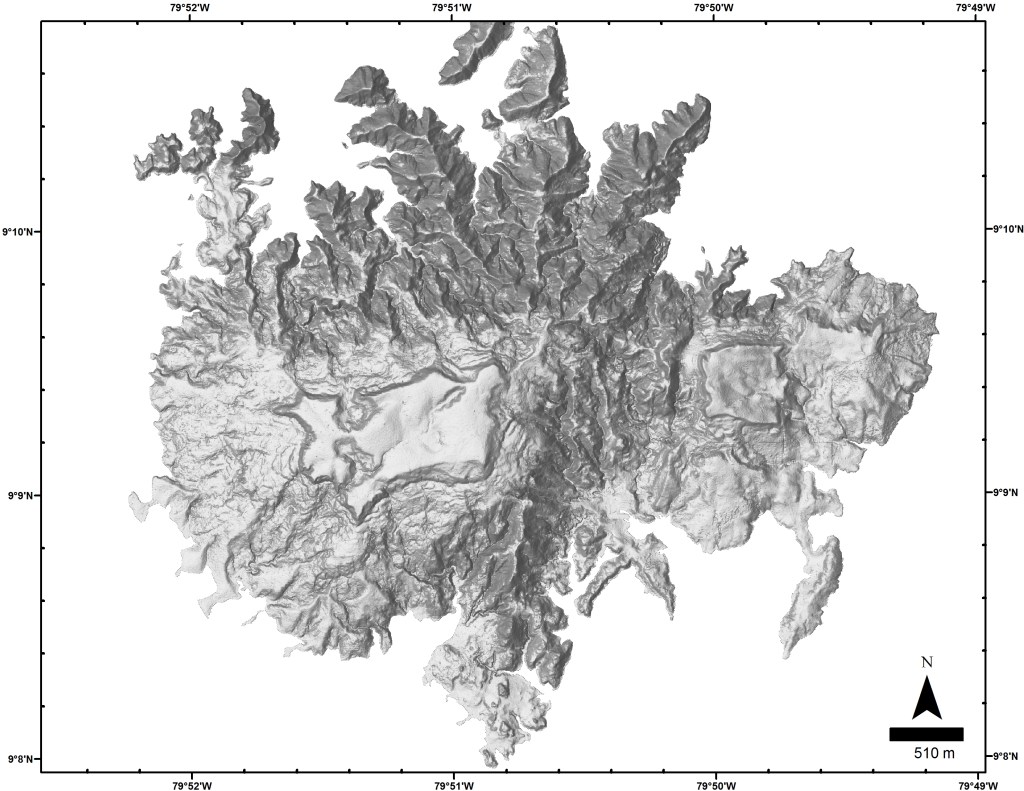
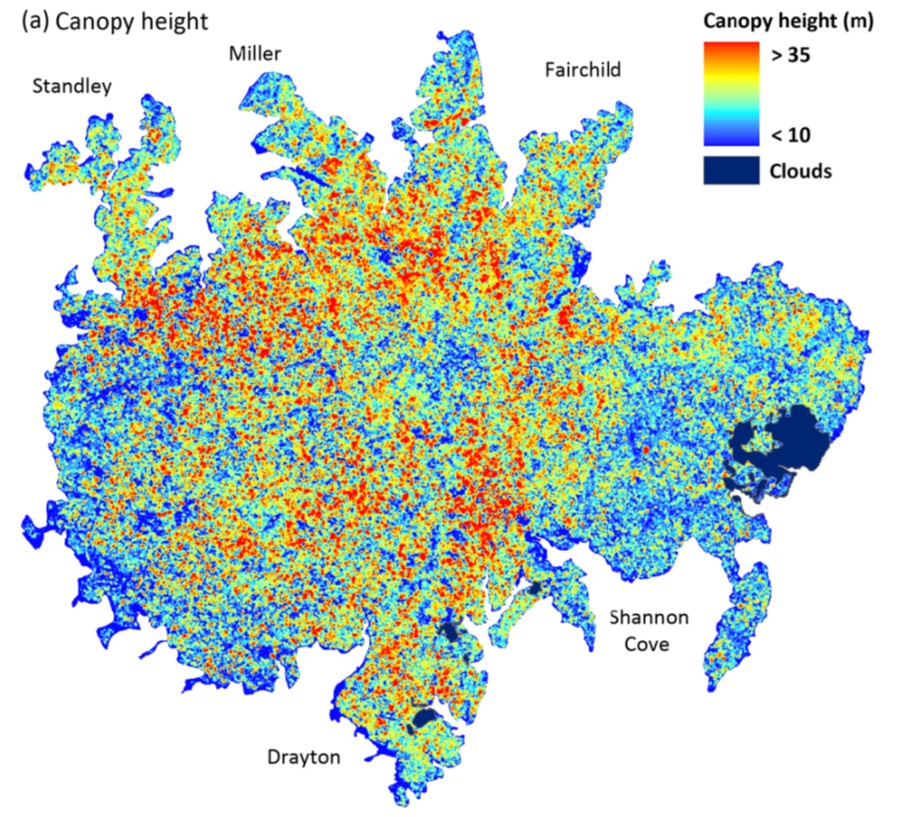
Mechanistic, physiologically based models can explain much of the variation in forest productivity with climate and soils, but little of the variation in mortality fluxes and biomass. Tropical forests vary widely in their structure and dynamics – and thus in their carbon stocks and fluxes – even after controlling for forest age. A mechanistic understanding of this variation is critical to accurately predicting responses to global change. What are the patterns of variation in tropical forest structure and dynamics at local, regional, and global scales, in relation to environmental gradients, biogeography, and historical factors? What mechanisms underly these patterns, and how can they be reproduced in vegetation models? How does temporal environmental variation, including directional changes due to anthropogenic influences, affect tropical forests? We investigate these questions through empirical research in central Panama and with the ForestGEO network of large-scale, tropical forest dynamics plots, together with modelling studies (see next section) parameterized with and evaluated against empirical datasets. Research in the Barro Colorado Nature Monument and nearby Soberania National Park addresses the roles of topography and soils. Research in central Panama more broadly spans a regional rainfall gradient and extensive variation in soils. The broader ForestGEO network encompasses wide variation in climate, soils, disturbance regimes, and biogeographic realm.
Selected references
Piponiot, C., K. J. Anderson-Teixeira, S. J. Davies, D. Allen, N. A. Bourg, D. F. R. P. Burslem, D. Cárdenas, C.-H. Chang-Yang, G. Chuyong, S. Cordell, H. S. Dattaraja, Á. Duque, S. Ediriweera, C. Ewango, Z. Ezedin, J. Filip, C. P. Giardina, R. Howe, C.-F. Hsieh, S. P. Hubbell, F. M. Inman-Narahari, A. Itoh, D. Janík, D. Kenfack, K. Král, J. A. Lutz, J.-R. Makana, S. M. McMahon, W. McShea, X. Mi, M. Bt. Mohamad, V. Novotný, M. J. O’Brien, R. Ostertag, G. Parker, R. Pérez, H. Ren, G. Reynolds, M. D. Md Sabri, L. Sack, A. Shringi, S.-H. Su, R. Sukumar, I. F. Sun, H. S. Suresh, D. W. Thomas, J. Thompson, M. Uriarte, J. Vandermeer, Y. Wang, I. M. Ware, G. D. Weiblen, T. J. S. Whitfeld, A. Wolf, T. L. Yao, M. Yu, Z. Yuan, J. K. Zimmerman, D. Zuleta, and H. C. Muller-Landau. 2022. Distribution of biomass dynamics in relation to tree size in forests across the world. New Phytologist 234: 1664-1677. https://doi.org/https://doi.org/10.1111/nph.17995
Muller-Landau, H. C., K. C. Cushman, E. E. Arroyo, I. Martinez Cano, K. J. Anderson-Teixeira, and B. Backiel. 2021. Patterns and mechanisms of spatial variation in tropical forest productivity, woody residence time, and biomass. New Phytologist 229: 3065-3087. https://doi.org/https://doi.org/10.1111/nph.17084. Invited Tansley review.
Rutishauser, E., S. J. Wright, R. Condit, S. P. Hubbell, S. J. Davies, and H. C. Muller-Landau. 2020. Testing for changes in biomass dynamics in large-scale forest datasets. Global Change Biology 26:1485-1498. DOI: 10.1111/gcb.14833.
Detto, M., H. C. Muller-Landau, J. Mascaro, and G. P. Asner. 2013. Hydrological networks and associated topographic variation as templates for the spatial organization of tropical forest vegetation. PLOS ONE 8(10):e76296. DOI: 10.1371/journal.pone.0076296
Mascaro, J., G. P. Asner, H. C. Muller-Landau, M. van Breugel, J. Hall, and K. Dahlin. 2011. Controls over aboveground forest carbon density on Barro Colorado Island, Panama. Biogeosciences 8:1615-1629.
Muller-Landau, H. C., R. S. Condit, K. E. Harms, C. O. Marks, S. C. Thomas, S. Bunyavejchewin, G. Chuyong, L. Co, S. Davies, R. Foster, S. Gunatilleke, N. Gunatilleke, T. Hart, S. P. Hubbell, A. Itoh, A. R. Kassim, D. Kenfack, J. V. LaFrankie, D. Lagunzad, H. S. Lee, E. Losos, J.-R. Makana, T. Ohkubo, C. Samper, R. Sukumar, I.-F. Sun, N. Supardi M. N., S. Tan, D. Thomas, J. Thompson, R. Valencia, M. I. Vallejo, G. Villa Muñoz, T. Yamakura, J. K. Zimmerman, H. S. Dattaraja, S. Esufali, P. Hall, F. He, C. Hernandez, S. Kiratiprayoon, H. S. Suresh, C. Wills, and P. Ashton. 2006. Comparing tropical forest tree size distributions with the predictions of metabolic ecology and equilibrium models. Ecology Letters 9:589-602. DOI: 10.1111/j.1461-0248.2006.00915.x
Muller-Landau, H. C., R. S. Condit, J. Chave, S. C. Thomas, S. A. Bohlman, S. Bunyavejchewin, S. Davies, R. Foster, S. Gunatilleke, N. Gunatilleke, K. E. Harms, T. Hart, S. P. Hubbell, A. Itoh, A. R. Kassim, J. V. LaFrankie, H. S. Lee, E. Losos, J.-R. Makana, T. Ohkubo, R. Sukumar, I.-F. Sun, N. Supardi M. N., S. Tan, J. Thompson, R. Valencia, G. Villa Muñoz, C. Wills, T. Yamakura, G. Chuyong, H. S. Dattaraja, S. Esufali, P. Hall, C. Hernandez, D. Kenfack, S. Kiratiprayoon, H. S. Suresh, D. Thomas, M. I. Vallejo, and P. Ashton. 2006. Testing metabolic ecology theory for allometric scaling of tree size, growth, and mortality in tropical forests. Ecology Letters 9:575-588.
Lianas and Vines
Lianas (woody climbing plants) and vines (nonwoody climbing plants) vary widely in abundance among forests. Their abundance is critically important to forest structure and dynamics, because trees infested with lianas and vines grow more slowly and have higher mortality rates. Liana abundance and diversity is particularly high in many tropical forests. What are the patterns, mechanisms, and consequences of variation in liana abundance among forests? We are addressing these questions through a combination of theoretical and empirical research. Our theoretical work spans from very simple models of liana-tree interactions to demographic vegetation models. Our empirical analyses draw on long-term datasets on tropical tree demography and liana load, as well as large databases of plant functional traits.
Selected references
Selected references:
Muller-Landau, H. C., and S. W. Pacala. 2020. What determines the abundance of lianas and vines? In Unsolved Problems in Ecology, ed. A. Dobson, D. Tilman and R. Holt, pp. 239-264. Princeton, NJ: Princeton University Press. Recognized with the Smithsonian Secretary’s Research Prize.
Visser, M. D., H. C. Muller-Landau, S. A. Schnitzer, H. de Kroon, E. Jongejans, and S. J. Wright. 2018. A host-parasite model explains variation in liana infestation among co-occurring tree species. Journal of Ecology 106:2435-2445. DOI: 10.1111/1365-2745.12997
Visser, M. D., S. A. Schnitzer, H. C. Muller-Landau,E. Jongejans, H. de Kroon, L. S. Comita, S. P. Hubbell, and S. J. Wright. 2018. Tree species vary widely in their tolerance for liana infestation: a case study of differential host response to generalist parasites. Journal of Ecology 106:781-792. DOI: 10.1111/1365-2745.12815

Landscape-scale Research with Drones
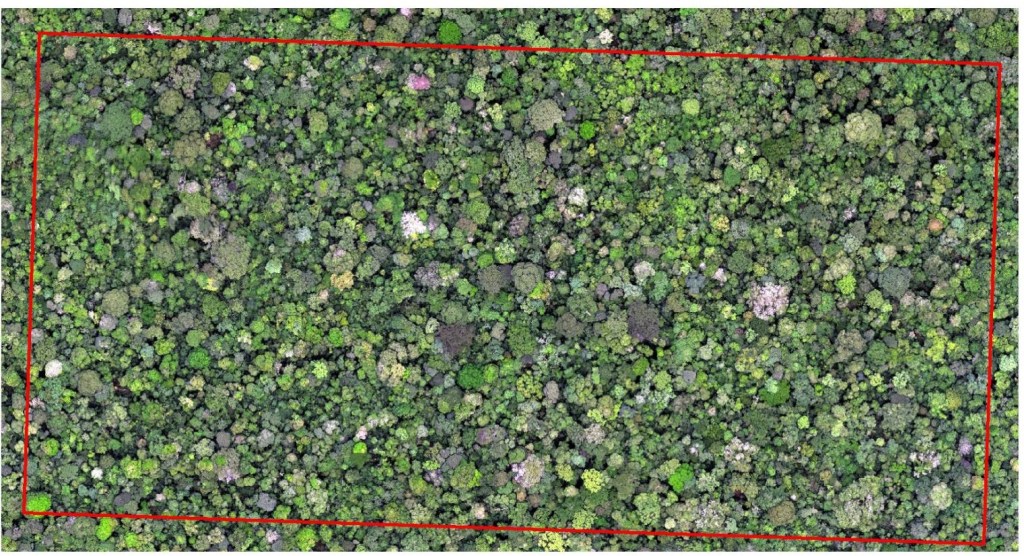
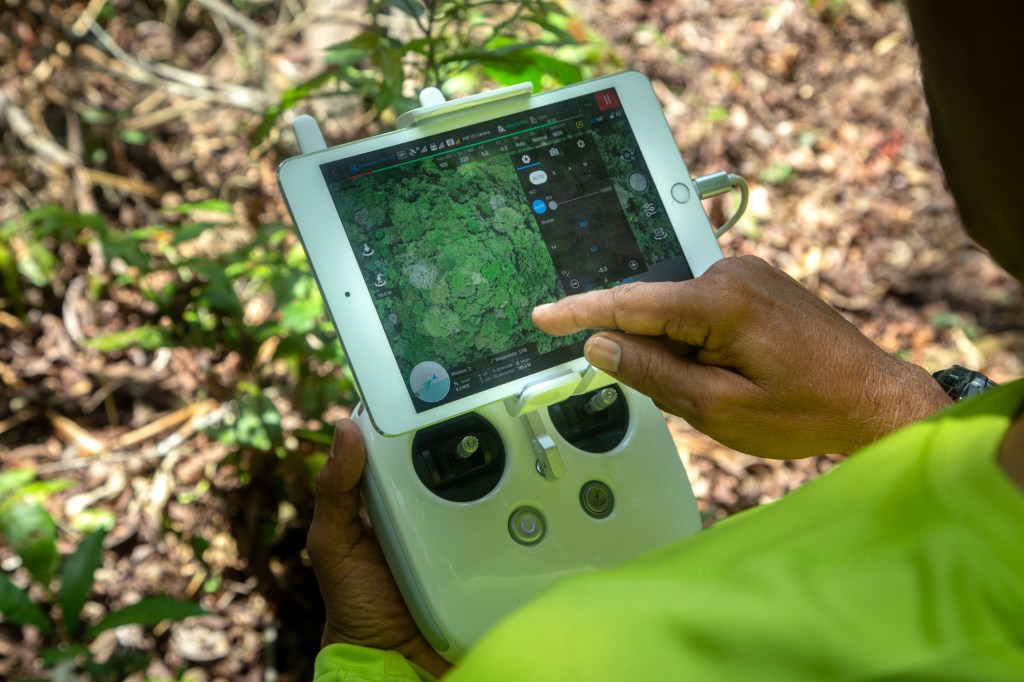
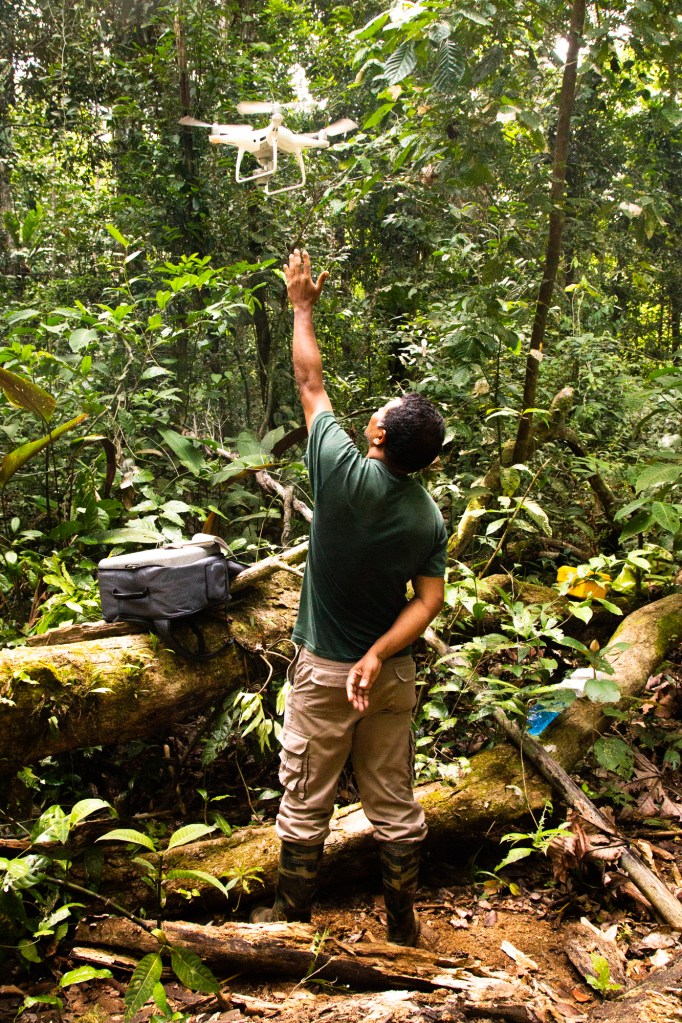
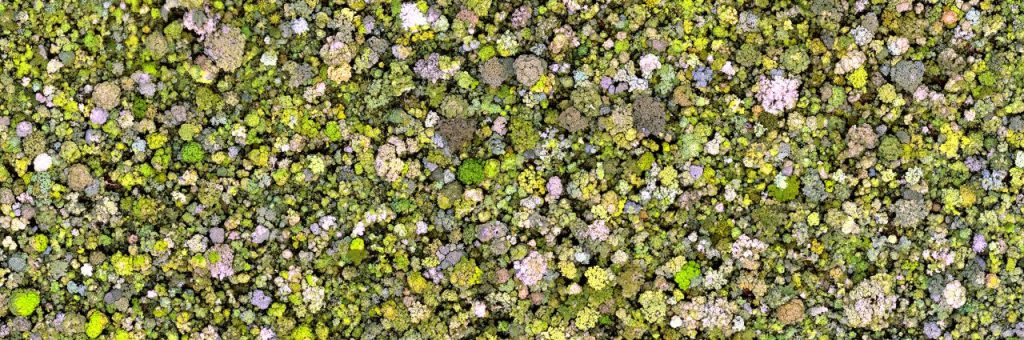
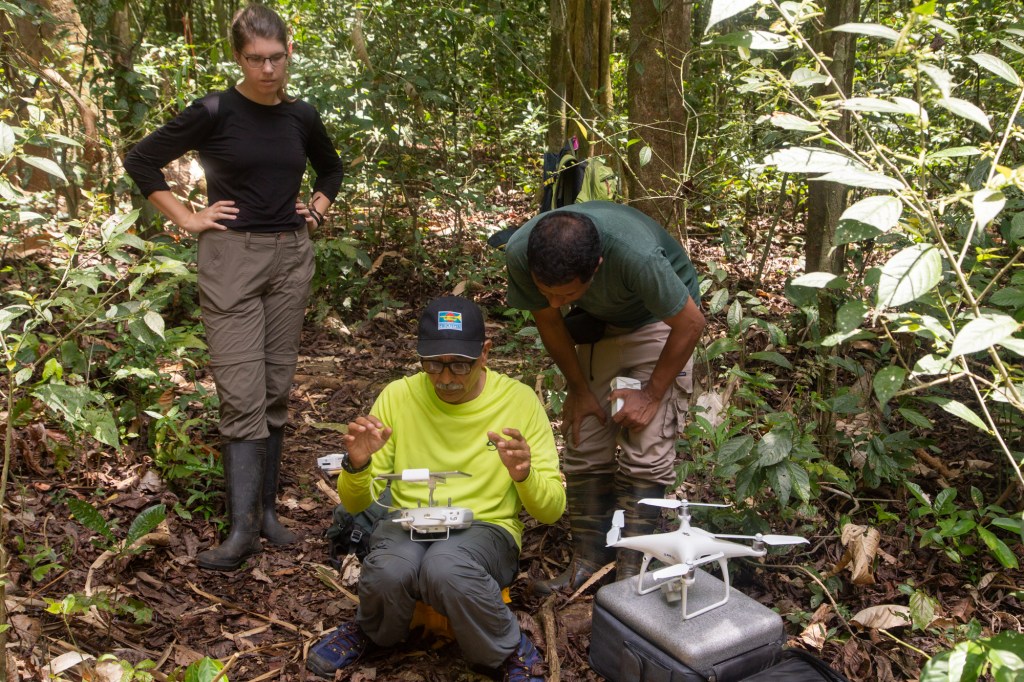
Drones (unoccupied aerial vehicles) now make it possible to easily and frequently take aerial photos and collect other types of data over large areas. Since 2014, we have been using drones to monitor tropical forests in Panama. This method enables us to monitor forests at high temporal resolution and over large areas, and provides detailed information on the crowns of canopy trees, which account for the majority of photosynthesis and biomass. We are currently monitoring tropical forest dynamics and phenology (leafing, flowering, and fruiting) of individual trees on the 50 ha forest dynamics plot on Barro Colorado Island at high temporal resolution by collecting 3-cm-resolution imagery every week. (Weekly collection began in early 2023; monthly data collection in 2014.) We are evaluating landscape-level forest dynamics across all 1543 ha of Barro Colorado Island through annual flights collecting 20-cm resolution imagery, which became monthly in late 2023 with NSF-NERC funding to the Gigante project. Additional flights target other research sites in central Panama.
KC Cushman and Helene Muller-Landau lead a tropical forest Drones Working Group in association with the Alliance for Tropical Forest Science to share experience and knowledge on how to collect and analyze drone-acquired imagery and data for investigation of tropical forest structure, dynamics, composition, and/or function. Longer term, we hope to facilitate multi-site collaborative studies that investigate similarities and differences across sites, and establish standardized methods for drone data collection. We envision building a community of practice for tropical forest researchers currently working with or hoping to work with drone data in the future. Anyone can join the group email list by filling out the form at https://forms.office.com/g/3yPDrJfDth See our web site for more information.
Selected Journal Publications
Lee, C. K. F., G. Song, H. C. Muller-Landau, S. Wu, S. J. Wright, K. C. Cushman, R. F. Araujo, S. Bohlman, Y. Zhao, Z. Lin, Z. Sun, P. C. Y. Cheng, M. K.-P. Ng, and J. Wu. 2023. Cost-effective and accurate monitoring of flowering across multiple tropical tree species over two years with a time series of high-resolution drone imagery and deep learning. ISPRS Journal of Photogrammetry and Remote Sensing, 201: 92-103. https://doi.org/https://doi.org/10.1016/j.isprsjprs.2023.05.022
Cushman, K. C., M. Detto, M. García, and H. C. Muller-Landau. 2022. Soils and topography control natural disturbance rates and thereby forest structure in a lowland tropical landscape. Ecology Letters 25: 1126-1138. https://doi.org/https://doi.org/10.1111/ele.13978
Araujo, R. F., S. Grubinger, C. H. S. Celes, R. I. Negrón-Juárez, M. Garcia, J. P. Dandois, and H. C. Muller-Landau. 2021. Strong temporal variation in treefall and branchfall rates in a tropical forest is related to extreme rainfall: results from 5 years of monthly drone data for a 50-ha plot. Biogeosciences 18: 6517-6531. https://doi.org/10.5194/bg-18-6517-2021
Park, John Y., H. C. Muller-Landau, J. W. Lichstein, S. W. Rifai, J. P. Dandois, and S. A. Bohlman. 2019. Quantifying leaf phenology of individual trees and species in a tropical forest using unmanned aerial vehicle (UAV) images. Remote Sensing 11:1534. DOI:10.3390/rs11131534
Miller, E., J. P. Dandois, M. Detto, and J. S. Hall. 2017. Drones as a tool for monoculture plantation assessment in the steepland tropics. Forests 8:168. DOI:10.3390/f8050168
Selected Data and Code Publications
Vásquez, V., M. García, M. Hernández, and H. C. Muller-Landau. 2023. Barro Colorado Island 50-ha plot aerial photogrammetry orthomosaics and digital surface models for 2018-2023: Globally and locally aligned time series. Smithsonian Tropical Research Institute. Smithsonian Figshare. https://doi.org/10.25573/data.24784053
Garcia, M., V. Vásquez, and H. C. Muller-Landau. 2023. Barro Colorado whole-island aerial photogrammetry products for 2018-2023. Smithsonian Tropical Research Institute. Smithsonian Figshare. https://doi.org/10.25573/data.24757284
Vásquez, V., K. C. Cushman, P. Ramos, C. Williamson, P. Villareal, L. F. Gomez Correa, and H. C. Muller-Landau. 2023. Barro Colorado Island 50-ha plot crown maps: manually segmented and instance segmented. Smithsonian Tropical Research Institute. Smithsonian Figshare. https://doi.org/10.25573/data.24784053
Cushman, K. C., H. C. Muller-Landau, M. Detto, and M. Garcia. 2022. Datasets for “Soils and topography control natural disturbance rates and thereby forest structure in a lowland tropical landscape”. Smithsonian Tropical Research Institute. Smithsonian Figshare. https://doi.org/10.25573/data.17102600.v1
Garcia, M., J. P. Dandois, R. F. Araujo, S. Grubinger, and H. C. Muller-Landau. 2021. Color orthomosaics of the 50-ha plot on Barro Colorado Island, Panama, for 2014-2019. Smithsonian Tropical Research Institute. Smithsonian Figshare. https://doi.org/10.25573/data.16869259.v2
Garcia, M., J. P. Dandois, R. F. Araujo, S. Grubinger, and H. C. Muller-Landau. 2021. Surface elevation models and associated canopy height change models for the 50-ha plot on Barro Colorado Island, Panama, for 2014-2019. . Smithsonian Tropical Research Institute. Smithsonian Figshare. https://doi.org/10.25573/data.14417933
These datasets are part of a collection of Panama forest UAV data on Smithsonian Figshare, which can be viewed at https://smithsonian.figshare.com/projects/Panama_Forest_Landscapes_UAV/115572

Building the Basis for Automated Species ID
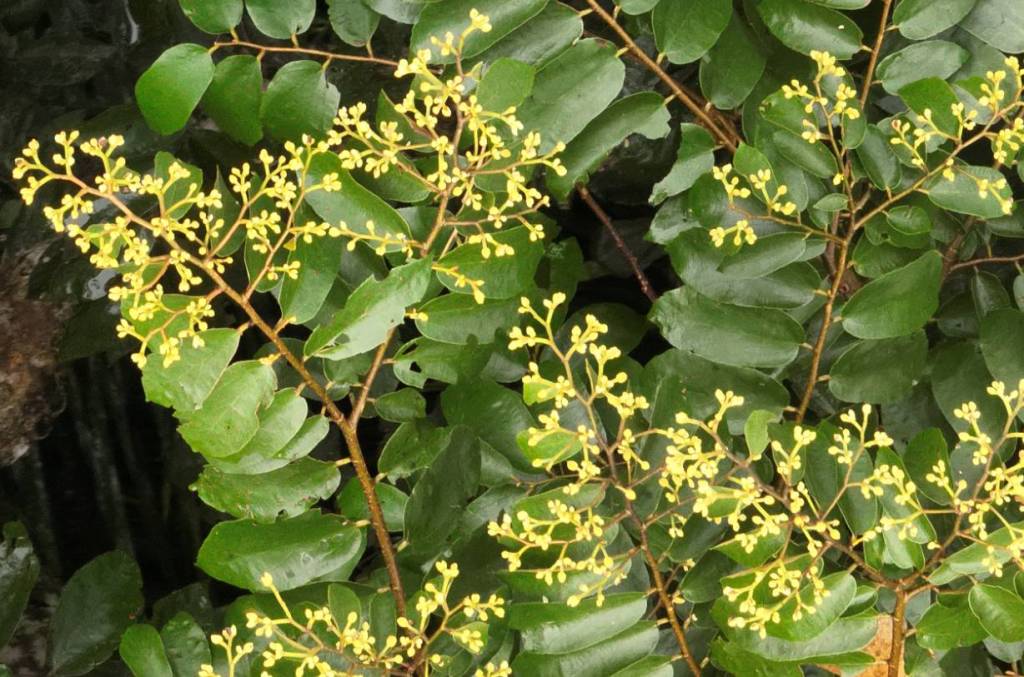
In 2024, we were awarded a Smithsonian path-finding grant to develop the basis for automated identification of woody plants in diverse tropical forests. Technological advances in hyperspectral imaging, laser scanning, and artificial intelligence now offer the potential for automated species identification of individual plants using remote sensing, smartphones, and/or other tools. This would enable large-scale, species-specific data collection in tropical forest and empower a wider range of researchers, students, and citizen scientists to contribute. However, to realize this potential we need to collect high-quality training data and analyze these data to develop appropriate machine learning algorithms and determine which types or combinations of data are most useful for species identification. We are currently collecting and publishing high-quality data on hyperspectral reflectance of flowers, fruits, leaves, and bark of tree and liana species in central Panama. We aim to quantify within-species consistency and among-species differentiation in hyperspectral reflectance of different plant parts.
In February 2025, we partnered with NASA in the AVUELO field campaign, which involved the collection of extensive airborne hyperspectral data combined with the collection of canopy leaf samples. Collection of auxiliary data and data processing and analysis are ongoing. More information on the dedicated AVUELO web page.
We are also collaborating with Etienne Laliberté (U. Montreal) to collect close-up drone photos of the tropical forest canopy, associate high-quality plant species taxonomic labels to these photos, and develop AI approaches to identifying such photos to species. This also contributes directly to our longer-term effort to map canopy trees and lianas across all of Barro Colorado Island, Panama.
Improving the Representation of Tropical Forests in Earth System Models
Earth system models (ESMs) simulate the earth’s climate system and its interaction with vegetation, and are used to predict the influences of policy scenarios on future atmospheric composition and climates. Among other things, these models simulate the feedbacks between tropical forests and the climate system. However, these models are currently unable to correctly capture observed spatial and temporal variation in tropical forest carbon budgets, and diverge wildly in their predictions of future responses. We are collaborating with the development teams for the FATES and LM3-PPA models to improve the representation of tropical forests in these models by building more accurate representations of key processes and improving parameter estimates, and to evaluate these models against multiple types of empirical data.
Selected references
Hanbury-Brown, A. R., T. L. Powell, H. C. Muller-Landau, S. J. Wright, and L. M. Kueppers. 2022. Simulating environmentally-sensitive tree recruitment in vegetation demographic models. New Phytologist 253:78-93. https://doi.org/10.1111/nph.18059
Needham, J. F., G. Arellano, S. J. Davies, R. A. Fisher, V. Hammer, R. G. Knox, D. Mitre, H. C. Muller-Landau, D. Zuleta, and C. D. Koven. 2022. Tree crown damage and its effects on forest carbon cycling in a tropical forest. Global Change Biology, 28: 5560-5574. https://doi.org/https://doi.org/10.1111/gcb.16318
Koven, C. D., R. G. Knox, R. A. Fisher, J. Q. Chambers, B. O. Christoffersen, S. J. Davies, M. Detto, M. C. Dietze, B. Faybishenko, J. Holm, M. Huang, M. Kovenock, L. M. Kueppers, G. Lemieux, E. Massoud, N. G. McDowell, H. C. Muller-Landau, J. F. Needham, R. J. Norby, T. Powell, A. Rogers, S. P. Serbin, J. K. Shuman, A. L. S. Swann, C. Varadharajan, A. P. Walker, S. J. Wright, and C. Xu. 2020. Benchmarking and parameter sensitivity of physiological and vegetation dynamics using the Functionally Assembled Terrestrial Ecosystem Simulator (FATES) at Barro Colorado Island, Panama. Biogeosciences, 17: 3017-3044. https://doi.org/10.5194/bg-17-3017-2020
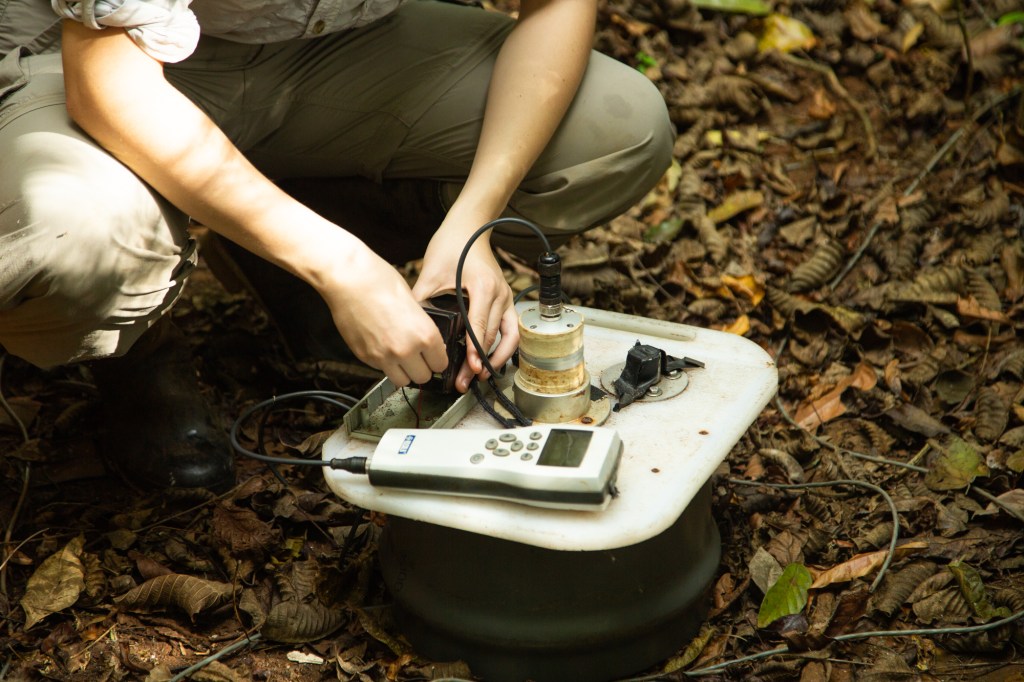

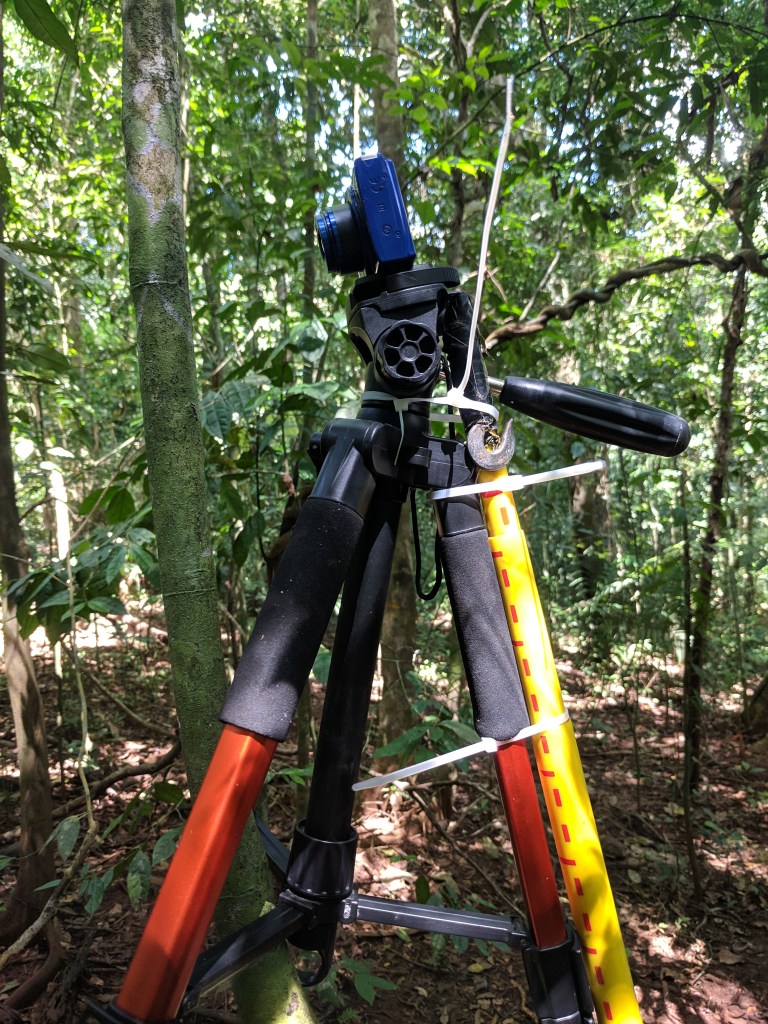


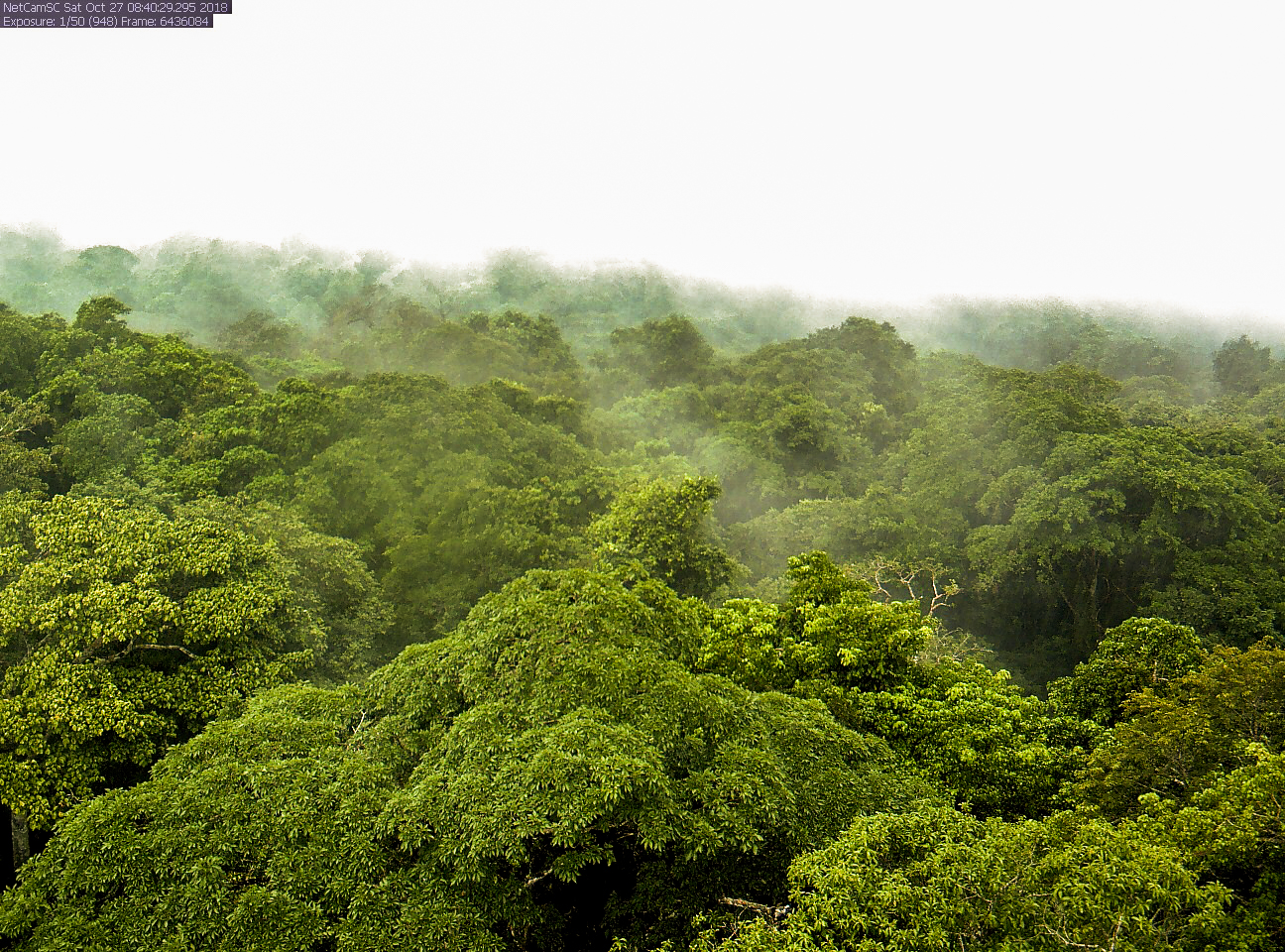
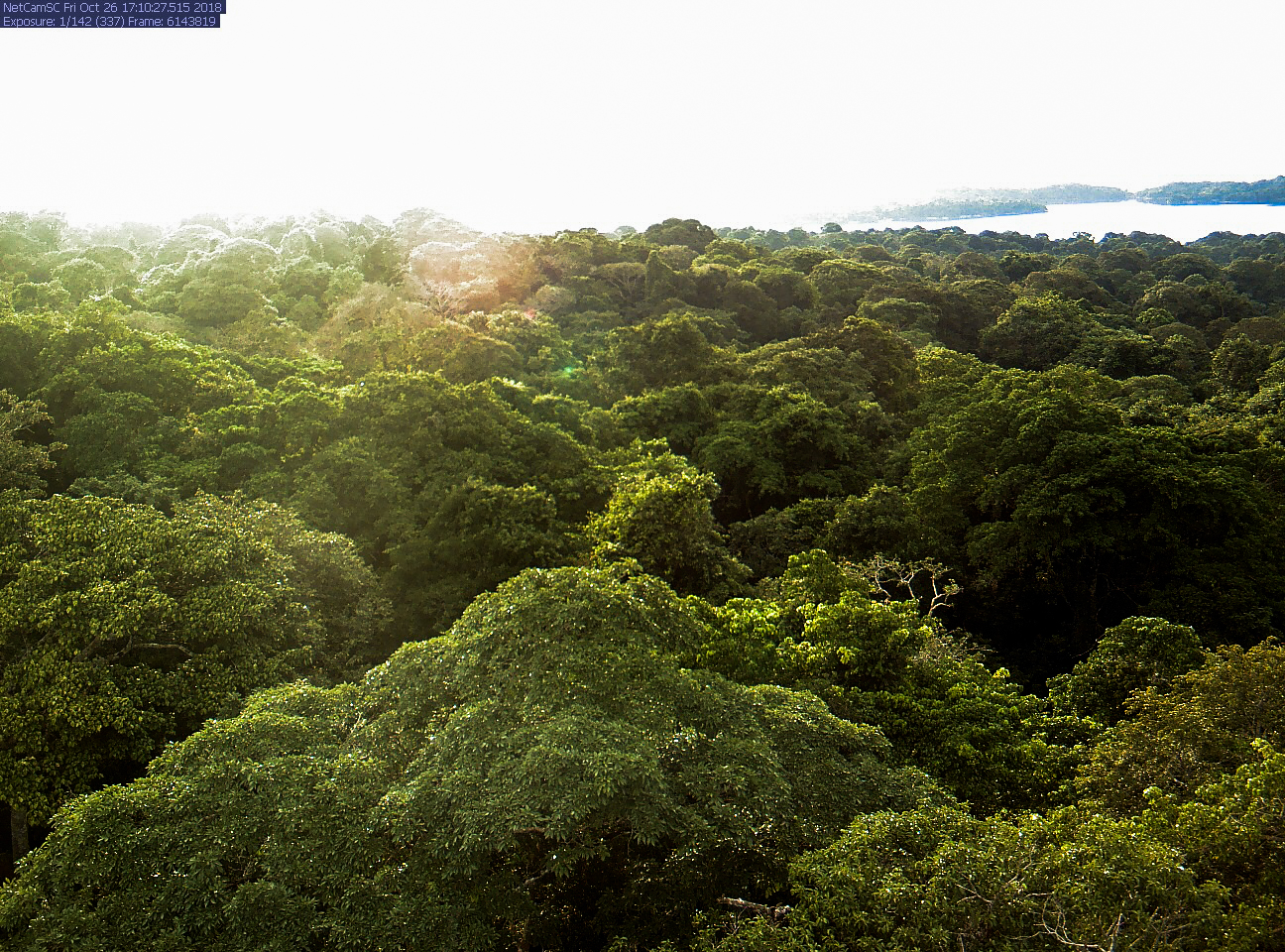
Selected views of the forest canopy on Barro Colorado Island captured by the phenocam maintained by Matteo Detto. The live feed can be viewed at https://phenocam.sr.unh.edu/webcam/sites/barrocolorado/





Separate web pages on other major research projects on which we are collaborating
AVUELO: Calibration and evaluation of hyperspectral remote sensing data for tropical forests with NASA AVIRIS
GEOTREES: High-accuracy ground data for satellite-derived biomass mapping
GIGANTE multi-site study of tropical tree mortality
Spatial ecology of tree-insect interactions
Effects of lightning on tree mortality and forest structure
 Quantitative Forest Ecology